
This post contains affiliate links, which means I may earn a small commission at no extra cost to you. As an Amazon Associate I earn from qualifying purchases. Thank you for supporting Halfway Wholeistic!
Mixing wood tones can get confusing. Should everything match? How many different woods is too many? I know, it can feel like a complicated topic! There are no real rules in design, since it all comes down to personal preference, but these three simple rules help me add a little logic so every room feels cohesive.
Below are my three rules for mixing wood tones, shown in my living room, dining room and kitchen, plus my favorite wood furniture in light and dark tones linked below the photos, so just swipe through to shop!
Rule 1: Choose Three Wood Tones
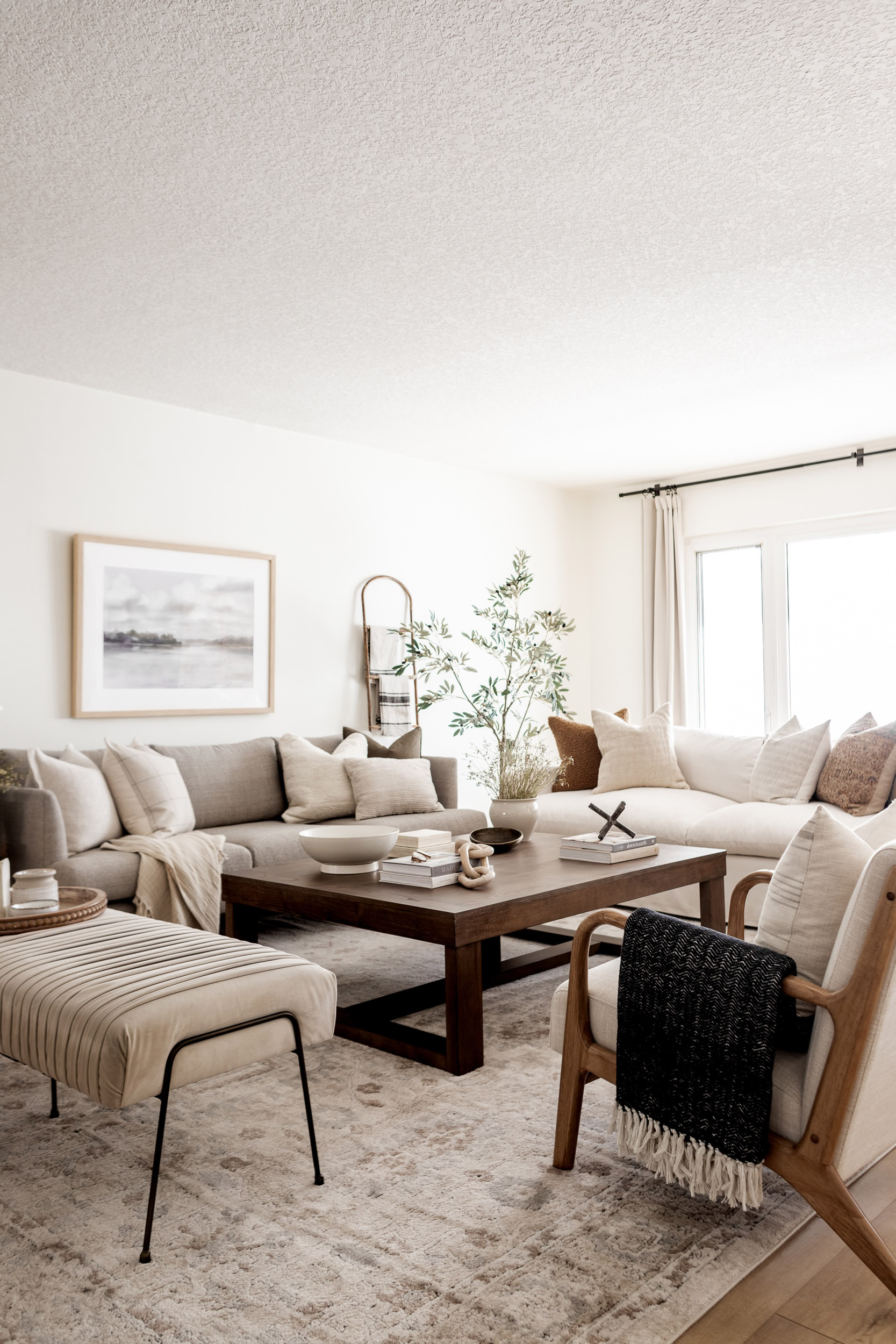
Choose three main wood tones to use throughout your home, and pick most of your pieces in those tones so the house feels cohesive. My home is a mix of light whitewashed woods, white oak and medium to dark woods, and I make sure to use one or all of them in every room.
Light and White Oak Wood Pieces I Love
Medium and Dark Wood Pieces I Love
Rule 2: Mix in Painted and Upholstered Pieces
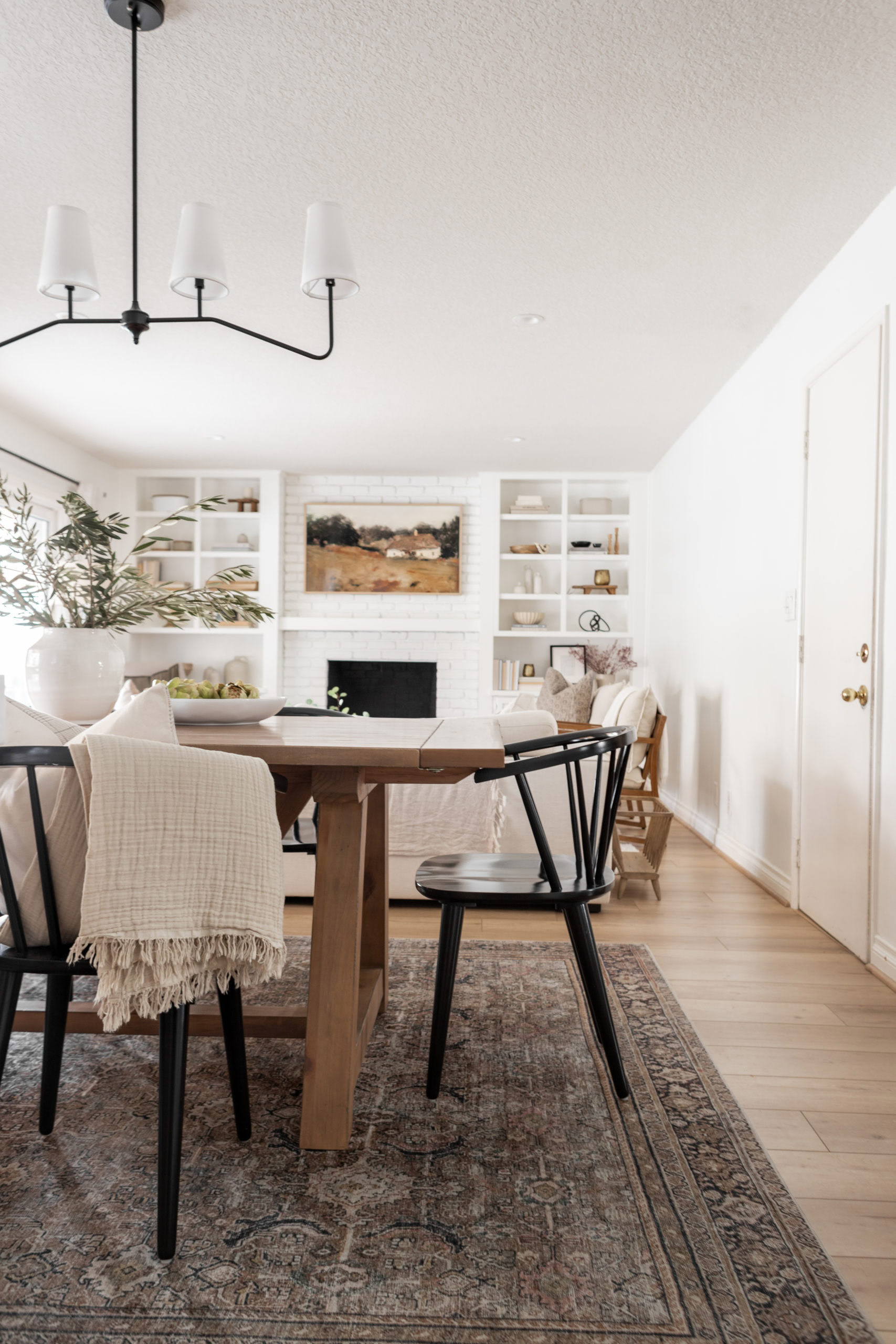
Painted and upholstered pieces break up all of the wood. Try to get an even spread of wood, painted and upholstered pieces in each room. In my dining and family room, a wood table, black painted chairs and upholstered seating let the rooms flow together. This isn’t only furniture either: decor, flooring and built-ins count too!
Rule 3: The Pinball Analogy
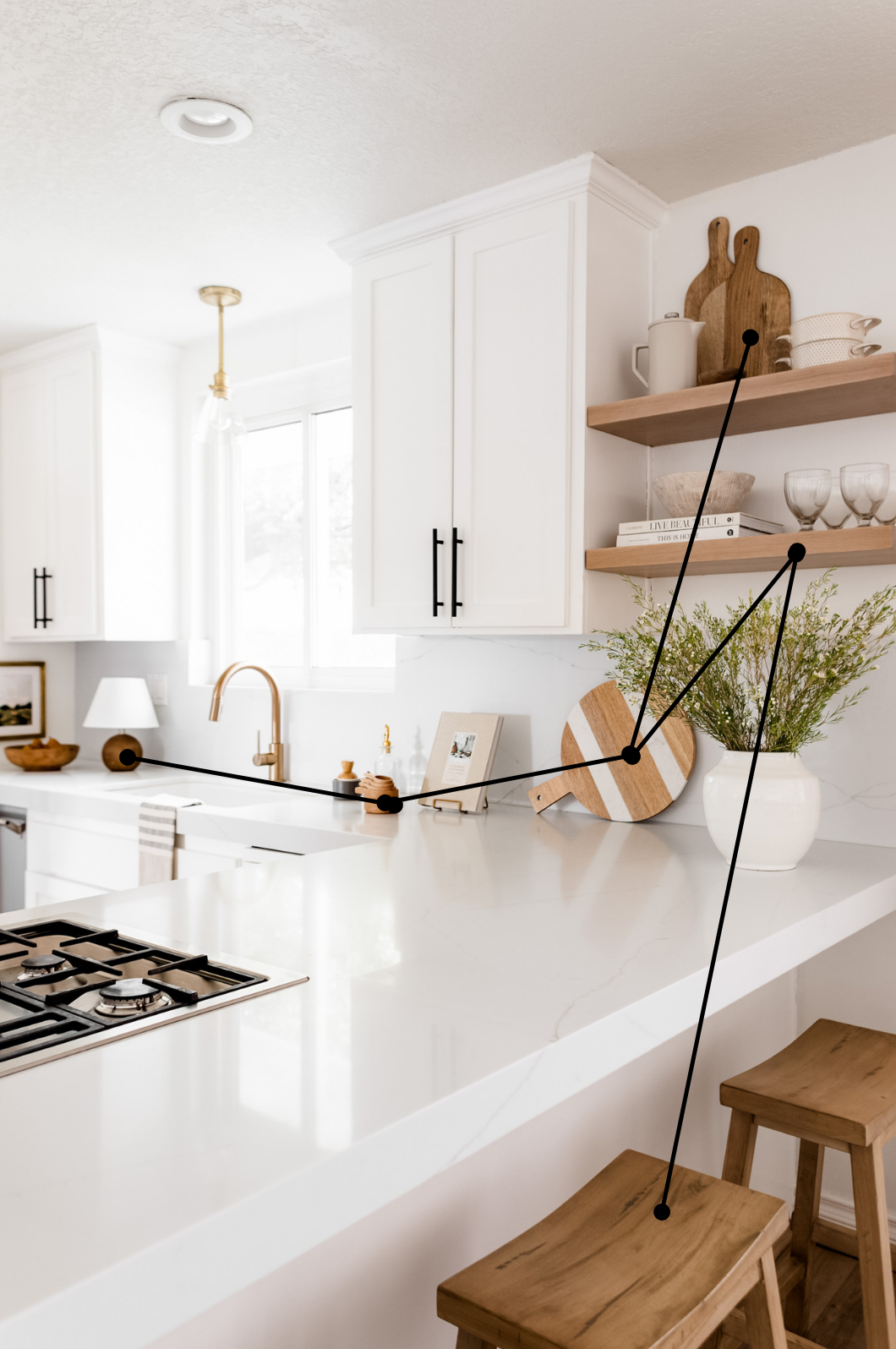
I have a weird analogy I made up for wood tones, or any tone you are bringing into a room: I call it the pinball analogy! When I design a space, I imagine a pinball moving through the room and make sure it can bounce off several spots with the same tone. In my kitchen, the cutting boards, open shelves, a wood bowl and the counter stools all repeat the same warm wood. Aim for at least three points of each tone so the room flows together.
Quick Checklist for Mixing Wood Tones
- Pick three wood tones (light, medium and dark is an easy start).
- Repeat each tone at least three times in a room.
- Break it up with painted and upholstered pieces.
- Keep undertones in the same family: warm with warm, cool with cool.
- Use a rug to separate wood floors from wood furniture.
Next, read my guide to mixing metals, which uses the same idea for brass, nickel and black, and shop everything in my home on my Shop Our Home page.